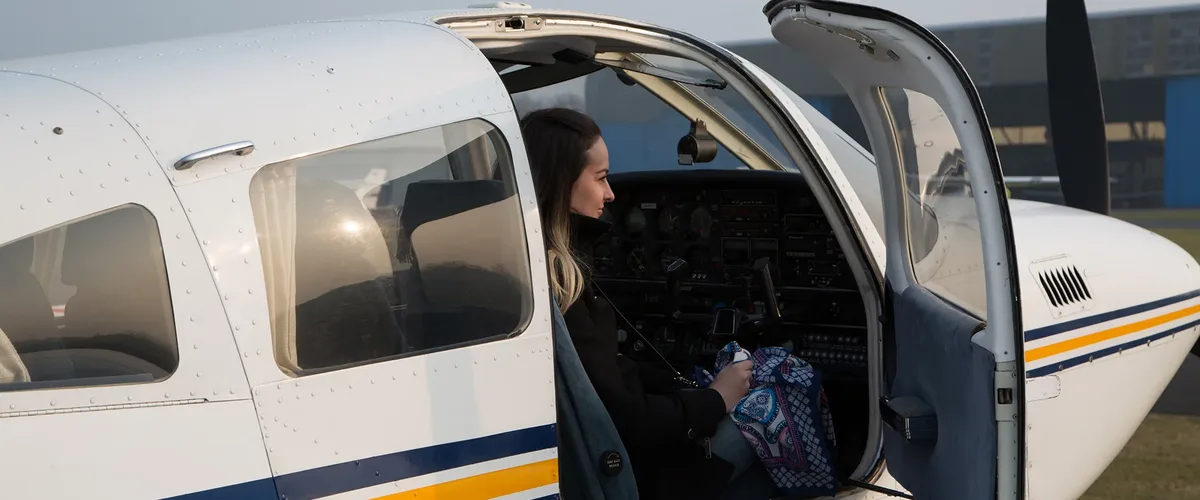
For passengers
Fly along in the seat beside the pilot
Somebody is flying a small aeroplane from one field to another and there is a seat free. You share what the flight costs, and you go along. No licence, no experience and no ticket — just an account and a pilot who says yes.
- Free to sign up
- You pay a share, straight to the pilot
- Every pilot verified before they publish
How it goes
Four steps, and none of them is a booking
Nothing here is reserved, sold or paid for in advance. Two people agree to fly together, and either of them may still decide not to.
-
Find a flight going your way
The board is readable without an account. You see the fields, the day and roughly what a seat costs before you tell anybody who you are.
-
Ask for the seat
Asking opens a conversation with the pilot. It reserves nothing, costs nothing, and is the place to put your questions before either of you decides.
-
The pilot says yes
They read who is asking and choose. Once they accept, you see the exact time, the aircraft and how to reach each other on the day.
-
Settle up at the field
Your share goes to the pilot directly, in whatever way suits you both. That share is the whole of what the seat costs you.
Seats going in the next few weeks
Every flight here has room on it right now. You see the field, the day and what a seat costs at most; the exact time and the aircraft appear once the pilot knows who you are.
Nothing planned yet — so ask for it
Place a route request and every pilot who plans this way hears about it. Or set a watch, and we tell you the moment somebody publishes the flight.
What it costs
A share of the flight, and nothing else
You pay a share of the direct costs: fuel, the hour on the aircraft, the landing fee. That share is the whole of it. The figure beside a flight is what the pilot worked out per seat, and the platform checks it against what that flight can reasonably cost.
- You can never be asked more than half of what the flight costs.
- The pilot is on board and pays their own share too.
- A flight asking more than that is refused, not flagged.
- If the flight changes, the share changes with it — never upward without your say-so.
- You settle it with the pilot, on the day or afterwards.
An ordinary four-seater at €280.00 an hour, flown for an hour, with three people on board.
This flight costs
€280.00
Fewer people on board means a larger share each, up to €140.00 — half of the flight, with only the pilot and you. Rightseat will not publish a seat above that.
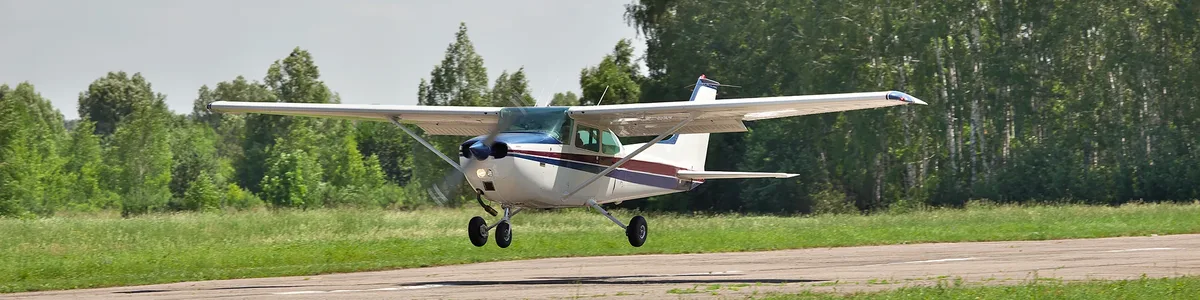
One pilot, one aeroplane, one day. Everything about this flight rests on their judgement rather than on a timetable.
Before a seat is published
What is checked, and where it stops
Nobody publishes a seat here on their word alone. There is also a line beyond which nobody outside the aeroplane can judge anything, and this is where it runs.
What we check
- Proof of identity, so that the person on the platform is the person at the aircraft.
- A valid pilot licence.
- A valid medical certificate.
- The certificate of registration of the aircraft.
- An insurance policy covering the aircraft and the people in it.
Every one of those has an expiry date on file. When a medical or an insurance policy lapses, the badge disappears and the ability to publish a seat goes with it, on that same day and without anybody having to notice.
On a pilot’s profile you can see which checks they have passed, how many flights they have shared, and what the people who flew with them wrote afterwards.
Safety and verification →And what we do not check
- How recently the pilot has flown, or how many hours they have.
- Whether the aircraft is airworthy on the day.
- Whether this particular flight is a sensible one to make.
- The weather, which we neither read nor judge.
All of that is carried by the pilot in command, on this flight as on every other one they make. Rightseat plans no flights, dispatches none, reads no weather and has no authority to tell anybody to go or to stay.
You can say no at any moment
The pilot in command may call off a flight at any point, and so may you. Up to the morning itself, at the field, standing next to the aircraft with the engine running — you can decide not to go, and you owe nobody an explanation for it.
Nothing is owed either way: nothing was paid, and no seat was ever booked. If something feels wrong to you, that feeling is reason enough. Say so, and tell us afterwards.
What you may ask first
Every seat request opens a conversation before anything is agreed, and it is a question rather than a booking. Use it — a pilot who is put out by any of this is telling you something useful.
- How long have you been flying, and how often do you fly this route?
- What happens if the weather turns while we are up there?
- How do I get home if the flight is called off?
- I have never been in a light aircraft — what should I expect?
Say too if you have never been in a light aircraft before. Most pilots would much rather know, and it changes how they brief you.
Before you say yes
A light aircraft is a different thing from an airliner in almost every way that a passenger notices.
- Bring less than you think
- A small aeroplane has a weight limit and it is not a generous one. Ask the pilot what you can bring.
- Allow far more time
- Ask what time you really need to be at the field, and expect to wait if the weather is marginal.
- It is loud
- You wear a headset and talk through it. There is no cabin service, and no toilet.
- Bumps are normal
- Light turbulence is the air being air. It is not a sign that anything is wrong.
Do I need to know anything about flying?
Nothing at all. You need an account and a willingness to be at the field on time. The pilot holds the licence, briefs you before you get in, and tells you what to do with the door and the belt.
How much does a seat cost?
A share of what the flight costs to fly — the hour on the aircraft, the fuel, the landing fee — divided over everybody on board, the pilot included. Never more than half of the whole flight, and nothing on top of it for the pilot or for us. The amount is on every flight before you ask for the seat.
Is it safe?
The pilot’s identity, licence and medical are checked by a person, and so are the registration and insurance of the aircraft — and the moment one of those lapses the seat cannot be published. What we cannot check is the flight itself. The pilot in command judges that, and they may call it off at any moment.
What if the weather is bad?
Then you do not fly. Light aircraft wait for weather far more often than airliners do, so treat a flight as one you would like to make rather than one you have to complete.
Can I change my mind?
Up to the moment the aircraft moves, and you owe nobody a reason. A seat is an arrangement between two people rather than a booking, and it is settled at the field. Tell the pilot through the platform so the seat can go back on the flight.
Nobody is flying where I want to go.
Then ask for it. A route request is visible to every pilot who plans a flight that way, and you hear about it the moment somebody publishes one. A search here never ends in nothing found.
Nothing going your way yet?
Place a route request. Every pilot who plans that way hears about it, and you get a message the moment somebody publishes the flight. An account is free and takes a minute.