Start here
How Rightseat works
From a seat nobody was going to sit in to two people who have agreed on a flight, and everything that happens in between.
Six steps, and about four minutes of reading.
- Three ways in
- A planned flight, an open day, or a request from somebody still looking.
- Never a dead end
- A search that finds nothing ends in a request or an alert.
- Paid to the pilot
- The share is settled between the two of you, at what the flight actually cost.
- The pilot decides
- The go is theirs on the day, as on every other flight they make.
The idea
An hour costs the same, full or empty
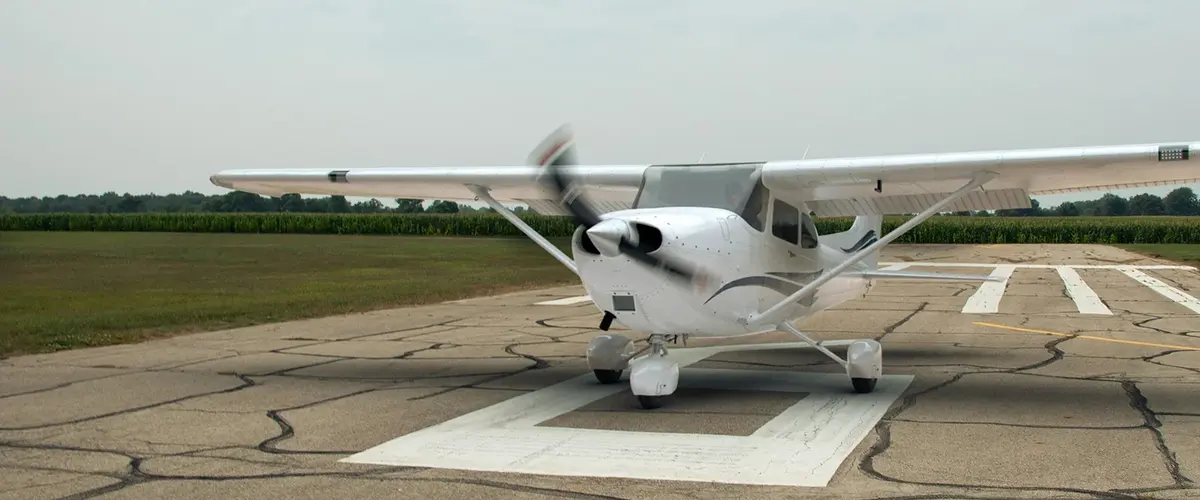
A pilot books an aeroplane, looks at the weather and flies from one field to another. Behind them are two or three seats that nobody is going to sit in. The hour on the meter costs exactly the same whether those seats are full or empty — the only thing that changes is how many people that hour is paid for by.
Rightseat is where the seat and the person find each other.
What Rightseat is
- A place where a free seat and a person who wants it find each other.
- A check on who is flying, on what they fly, and on whether the papers are current.
- A ceiling on what a seat may cost, worked out for that flight before it is published.
What it is not
- An operator. The flying, the dispatching and the cancelling all belong to the pilot.
- A marketplace. The share is settled between the two people on the flight.
- A booking. A request opens a conversation, and only the two of them can close it.
Step by step
From a free seat to a flight
The first three steps are how two people find each other. The last three are what happens once they have.
-
Somebody says what they have, or what they need
Three ways it starts
There are three ways this starts, and they all end at the same place.
-
A planned flight
The pilot knows where they are going and when, and says how many seats are free.
-
An open flight
The pilot wants to fly but not to anywhere in particular, and says when they have time and how far they will go.
-
A route request
Nobody has planned your route yet, so you ask for it and wait for a pilot to plan one.
A search that finds nothing is not a dead end here. General aviation is thin enough that most searches come up empty on any given day, so an empty result always ends in a request or an alert.
-
-
The platform looks for the overlap
Fields nearby, dates that overlap
Fields, dates and distances rarely line up exactly, so nothing here is matched on an exact address. A flight and a request meet when the fields are close enough to each other, the dates overlap, and the detour is one the pilot said they were willing to make.
Times are worked out in the local time of the field concerned, never in the time zone of whoever happens to be looking. A departure is a window rather than a moment, because that is what a light aircraft flight actually is.
-
A question, not a booking
Nothing is reserved
Asking for a seat opens a conversation. It reserves nothing and commits nobody. The pilot reads who is asking, can ask a few things back, and then accepts or declines — and a passenger who has changed their mind may withdraw just as freely.
What a stranger sees of a flight is deliberately coarse: the field, the day and the part of the day. The exact time, the registration and the pilot’s name appear once there is an account behind the request, because a time to the minute next to a field and a date says rather precisely where one particular aeroplane will be.
-
What it costs, and to whom
Never more than half the flight
A passenger shares in the direct costs of the flight — the hour on the aircraft, the fuel, the landing fees — divided over everybody on board, the pilot included. The pilot pays a share too, and always at least half, so a seat can never be worth more to them than the flight costs.
The two of you settle between yourselves. The platform never takes a percentage of the costs — a cut would give us an interest in those costs being higher.
How cost sharing works → -
Who has been checked, and who decides
Five documents, each with an expiry date
Before a pilot can publish a single seat we check their identity, licence and medical, and the registration and insurance of the aircraft. Every document has an expiry date on file; when one lapses, the badge goes and so does the ability to publish.
The flight itself is carried by the pilot in command, on this one as on every other, and they may call it off at any moment. Rightseat plans no flights, judges no weather and inspects no aircraft.
Safety and verification → -
Afterwards
Both reviews appear at once
Both people are asked whether the flight went ahead and what it was like. Neither review appears until both have been written or the window has closed, so that nobody writes theirs in answer to the other.
The platform introduces two people, and then it gets out of the way.
Which half is yours
Which side are you on?
The rest of it is written twice, once from each seat.
You have the aeroplane
What you may share, what we check before you can publish a seat, and why you stay pilot in command throughout.
For pilots → If you want a liftYou want to come along
What a seat on a light aircraft is really like, what has been checked about the pilot, and what you may ask before you say yes.
For passengers →-
How cost sharing works →
The ceiling, the divisor and a sum you can put your own rate into.
-
Safety and verification →
What is checked, by whom, and what happens to the documents afterwards.
-
Frequently asked questions →
The questions both sides ask before they arrange anything.
That is the whole of it
Ask for a route, or watch one, and you hear about it the moment somebody plans a flight that fits.